In many survival games, night is just darker. In Shardana it is a different game, and the day is mostly about getting ready for it.
Day: building and understanding
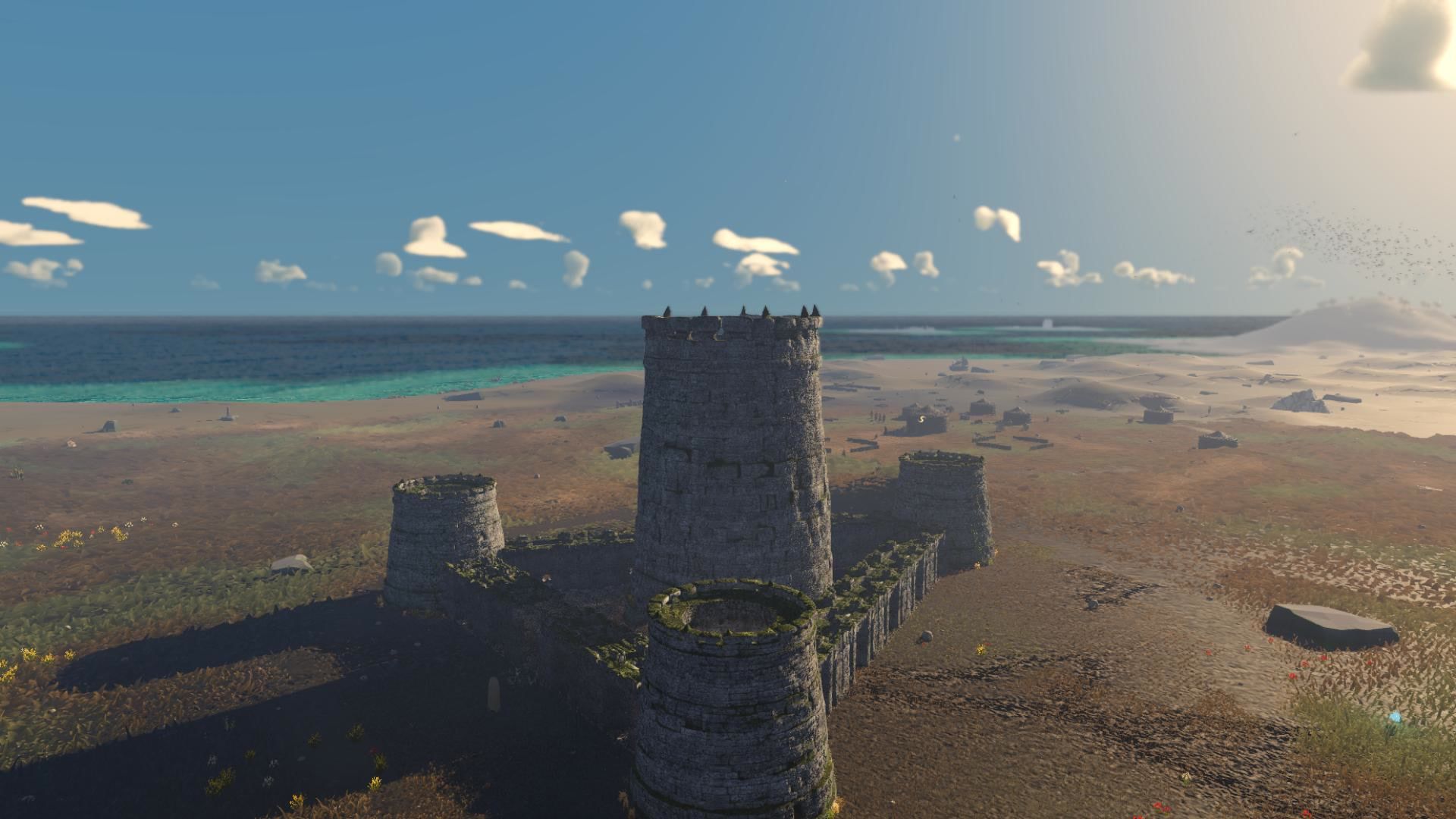
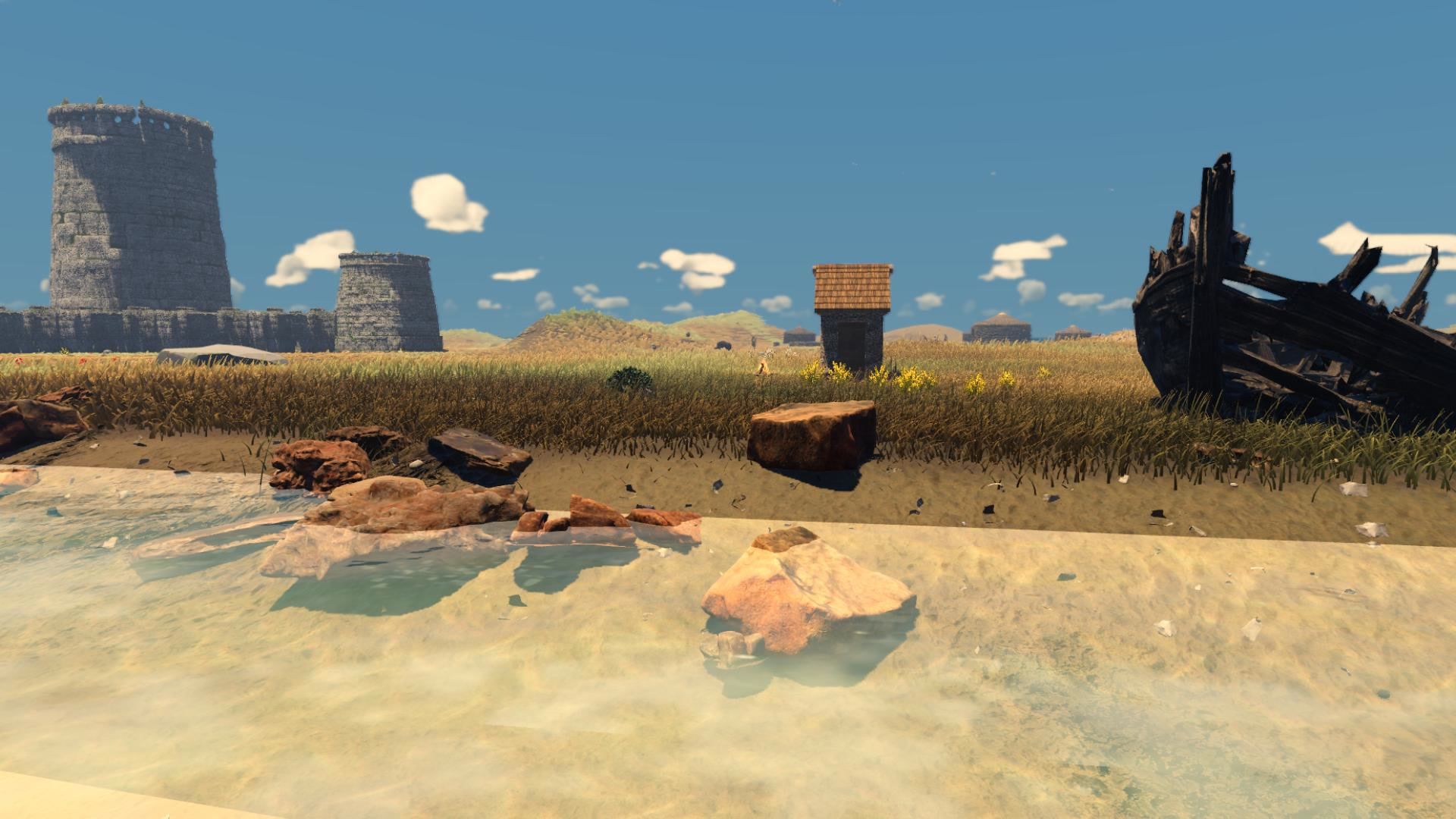
In daylight the island is big and generous. You gather, build, fish, hunt and cook. You talk to the villagers, help with their work, play morra with them. It is when you get to know the village, and from day four it is also when you watch it: who coughs, who looks at you strangely, who is holding something they did not have before.
The sky is not always clear. Clouds cast shadows on the ground, storms roll in from the sea and change your plans: in the rain, an open fire will not last.
Dusk: a deadline
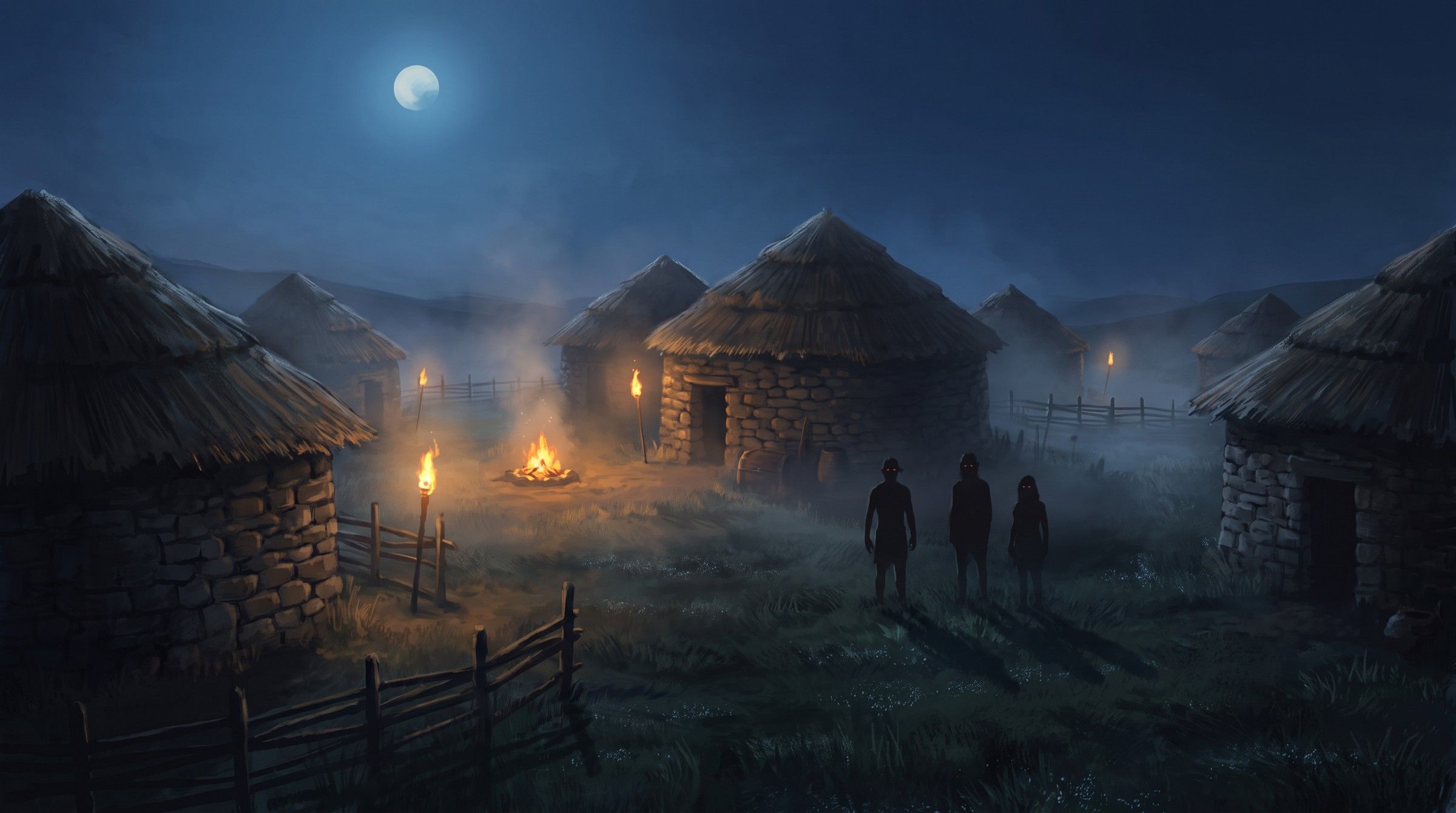
When the light turns orange, the island is telling you to head home. You need a roof and a bed: you can only sleep after sunset, and only under a shelter of your own. It is also the hour when some people’s eyes start to catch the light like an animal’s.
Night: survive
At night, infected villagers come out to hunt anyone left outside, and each night more of them turn. The choices become simple and hard: lock yourself in and wait for dawn, go out together to defend the village, or take a risk for something you really need.
In co-op, night has an extra layer. Whoever lost a duel with an infected villager transforms: they fly over the huts, smash walls and hunt. They will turn human again at dawn, under their own roof or at the sacred well. Until then, it is up to their friends to stop them.
Dawn: taking stock
In the morning you count the damage and go back to investigating. The cycle starts again, a little tighter each time.
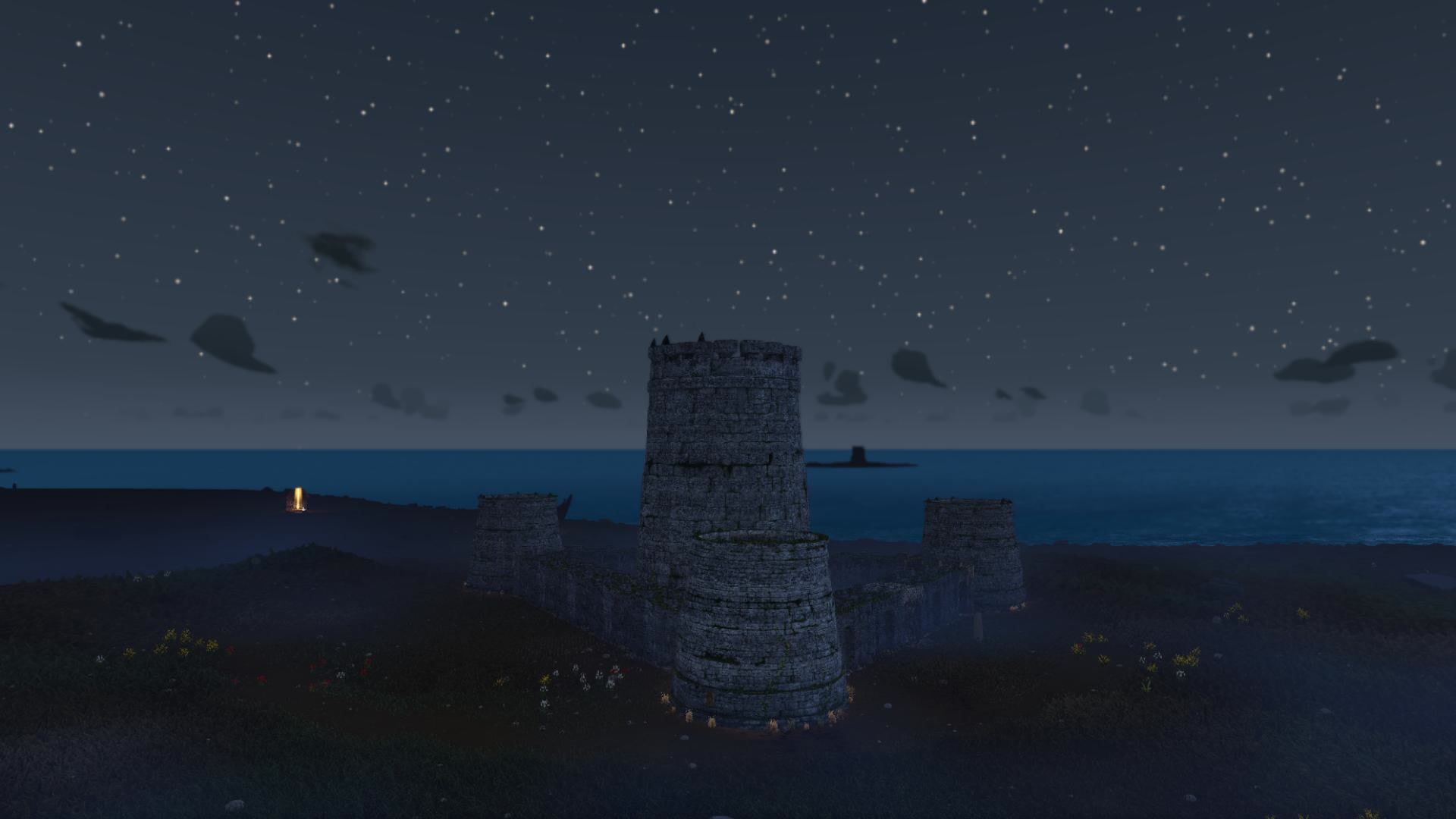
You can play the first full cycle in the free demo, which ends the morning after the first night of the sickness. The evening-versus-night comparison from the same spot, with the slider, is on the game page.
Shardana
Enjoyed it? Add Shardana to your Steam wishlist and try the free demo.