
The island of Nura
Stone, bronze and legends
Shardana draws on the Nuragic civilisation, its landscapes, its artefacts and the folklore of Sardinia. It is not a backdrop: monuments, traditions and beliefs are how the game is played.
The island
Nura, an island that does not exist
Nura is fictional, but its shape and colours come from Asinara: a long, narrow island, patchy Mediterranean scrub, granite on the coast, turquoise water in the coves. Around it, an archipelago of smaller islands you reach by raft.
The main island holds the village, the Santu Antine nuraghe and the hill of herbs. Beneath it, forgotten galleries and halls.
The Nuragic civilisation
A Bronze Age that games have almost never told
Between the second and first millennia BC, Sardinia was home to communities that built mortarless stone towers, cast bronze into figurines of warriors and offerants, dug sacred wells and buried their dead in monumental tombs. They left no writing we know of: what remains is the stone.
The game takes its name from the Shardana, one of the “Sea Peoples” mentioned in Egyptian sources. Their link to Sardinia is a hypothesis debated by scholars; Shardana uses it as the starting point for a work of fiction, not as a historical claim.
Nuraghi
Dry-stone towers, often several joined by curtain walls. Sardinia has around seven thousand of them. In the game you can even build one.
Giants’ tombs
Collective burials with a stele and a semicircular forecourt, used by Nuragic communities.
Domus de janas
Tombs cut into the rock, older than the nuraghi. Folk tradition calls them “fairy houses”.
Dolmens
Large stone slabs laid on upright stones: funerary monuments of Sardinian prehistory.
Sacred wells
Temples built around groundwater, with steps leading down into the dark. In the village, the well is the heart of the day.
Stone giants
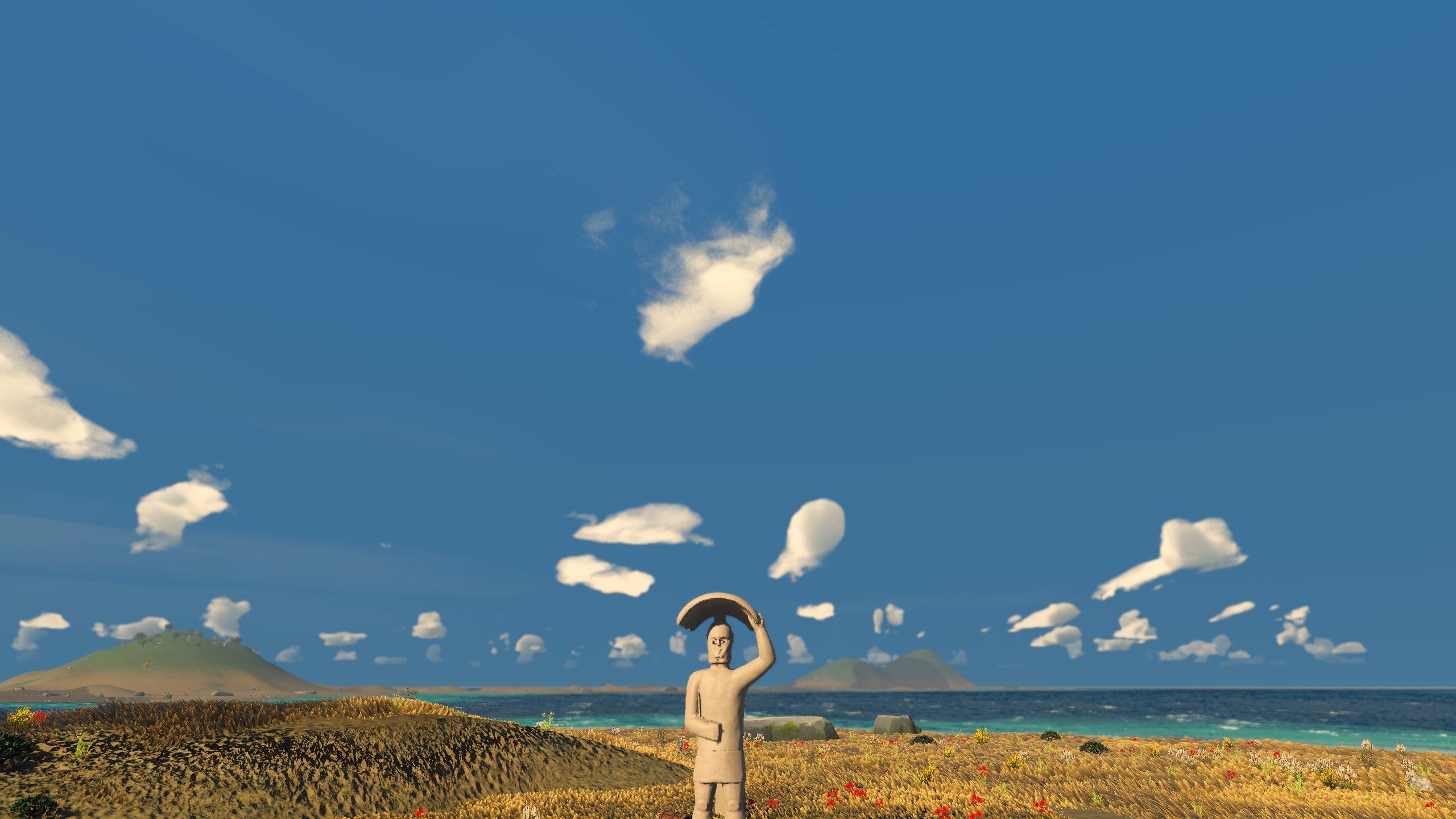
Inspired by the statues of Mont’e Prama, among the oldest free-standing sculptures of the western Mediterranean.
HUD-free flyovers
The places of Nura
A fictional island inspired by the wild landscapes of Asinara.
- captured in-engine, no HUD
Santu Antine at sunset
The basalt towers of the nuraghe are the landmark the whole island is read from. The herbs for the cure grow on the hill beside it.
- captured in-engine, no HUD
The shipwreck beach
This is where the sea leaves you, next to what is left of the ship. Clear shallow water, and a chest to open.
- captured in-engine, no HUD
The domus de janas
Tombs cut into the rock, fairy houses in Sardinian tradition. The lights drifting out of the doorway are not fireflies.
- captured in-engine, no HUD
The dolmen
Stones raised by ancient hands, flowers in the dry grass. In the game you can build one of your own.
- captured in-engine, no HUD
The giants’ tomb
A stele and a stone forecourt facing the sea. Nuragic communities buried their dead here together.
- captured in-engine, no HUD
The boulder coast
Granite, waves and the sun sinking into the open sea. You fish from the rocks; on the horizon, the other islands.
- captured in-engine, no HUD
The lost nuraghe
A lone tower far from the village. The map calls it lost, and there is a reason.
- captured in-engine, no HUD
The storm
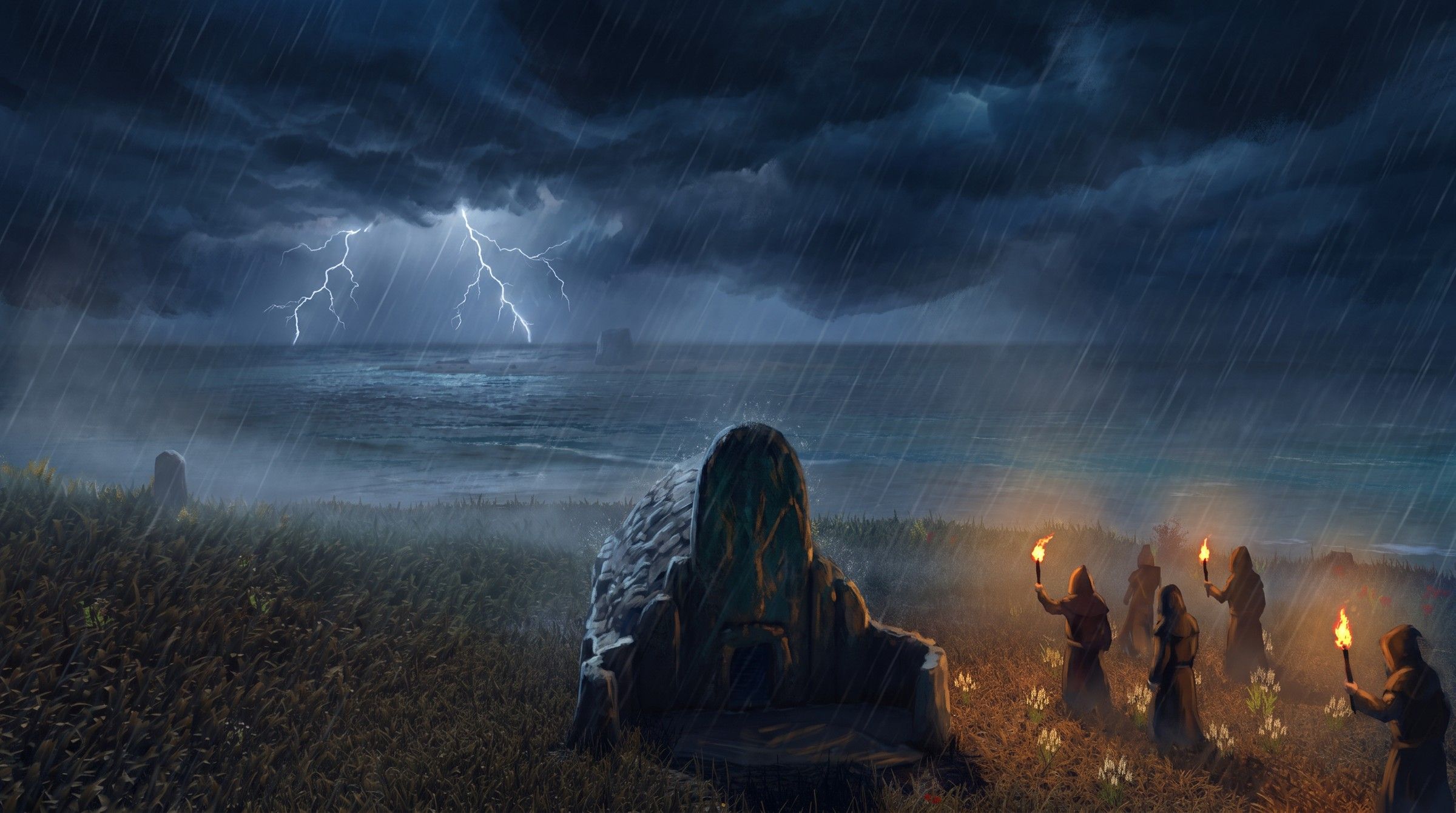
Storms roll in from the sea and change the day: rain, wind, lightning over the huts.
- captured in-engine, no HUD
Santu Antine by night
Under the stars the towers are the only still shape on the horizon. You are not always alone up there.
Folklore and mysteries
The stories told in a low voice
Creatures, superstitions and traditional tales give Nura its particular kind of fear: not hordes of monsters, but something you already know.
The Janas
In Sardinian tradition they are small fairy women who live in the domus de janas, weave in the dark and do not like intruders. On Nura their lights drift out of the tomb doorways.
Bobbotti
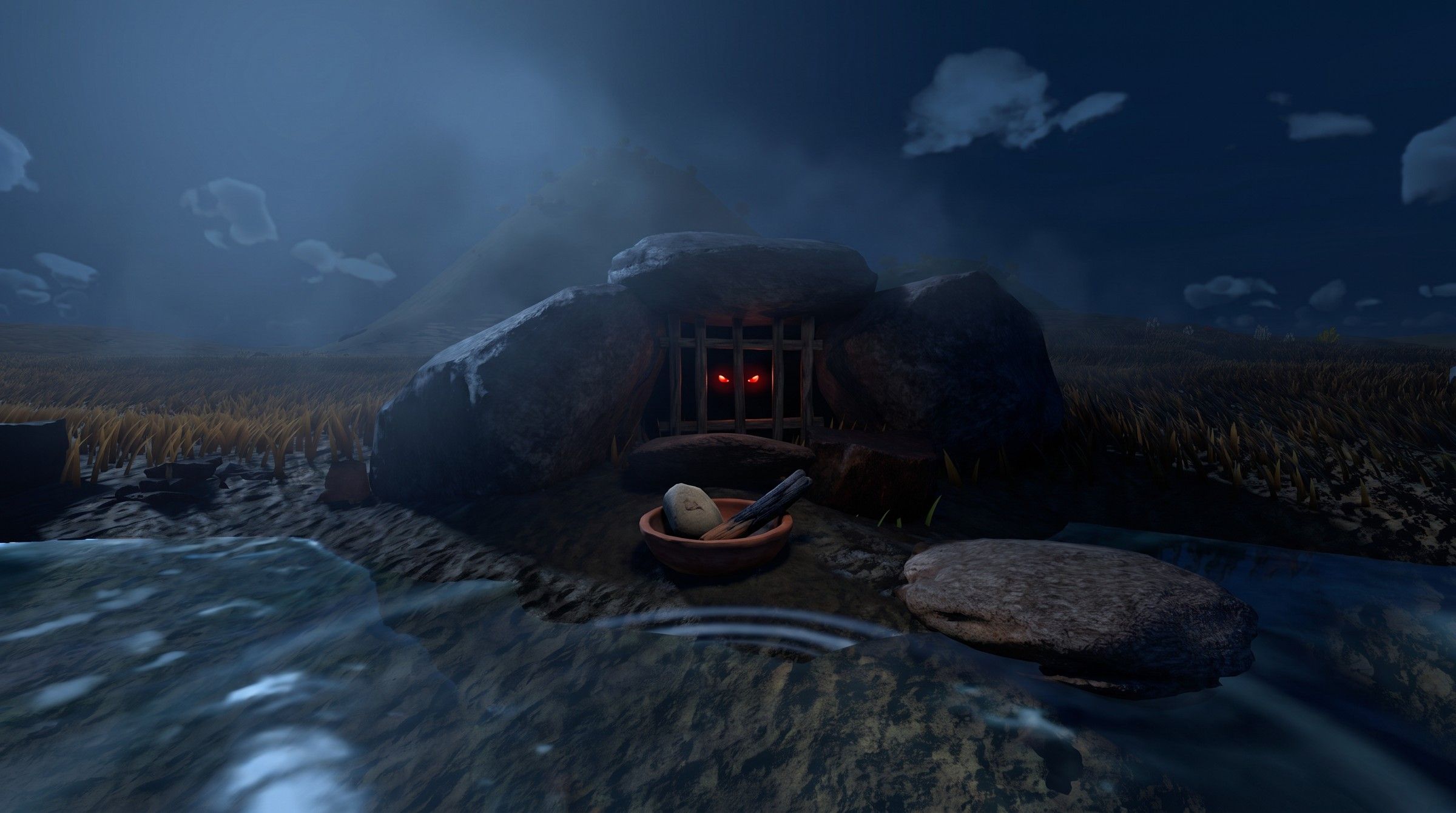
The bogeyman of stories told to children. In the game he lives in a cave behind a wooden gate: at night you only see two red eyes, and sometimes he accepts an offering.
Sa Mere and the spirits
Other presences drawn from Sardinian legends, which you meet as you play.
The masks
The cowbells of the Mamuthones keep time for the village circle dance: a ritual you actually dance on Nura.
Concept art
How we picture the nights of Nura
Paintings made from real in-game shots: same places, same architecture, the atmosphere pushed a little further.
Bronzes and legends
An island of stone, bronze and fear
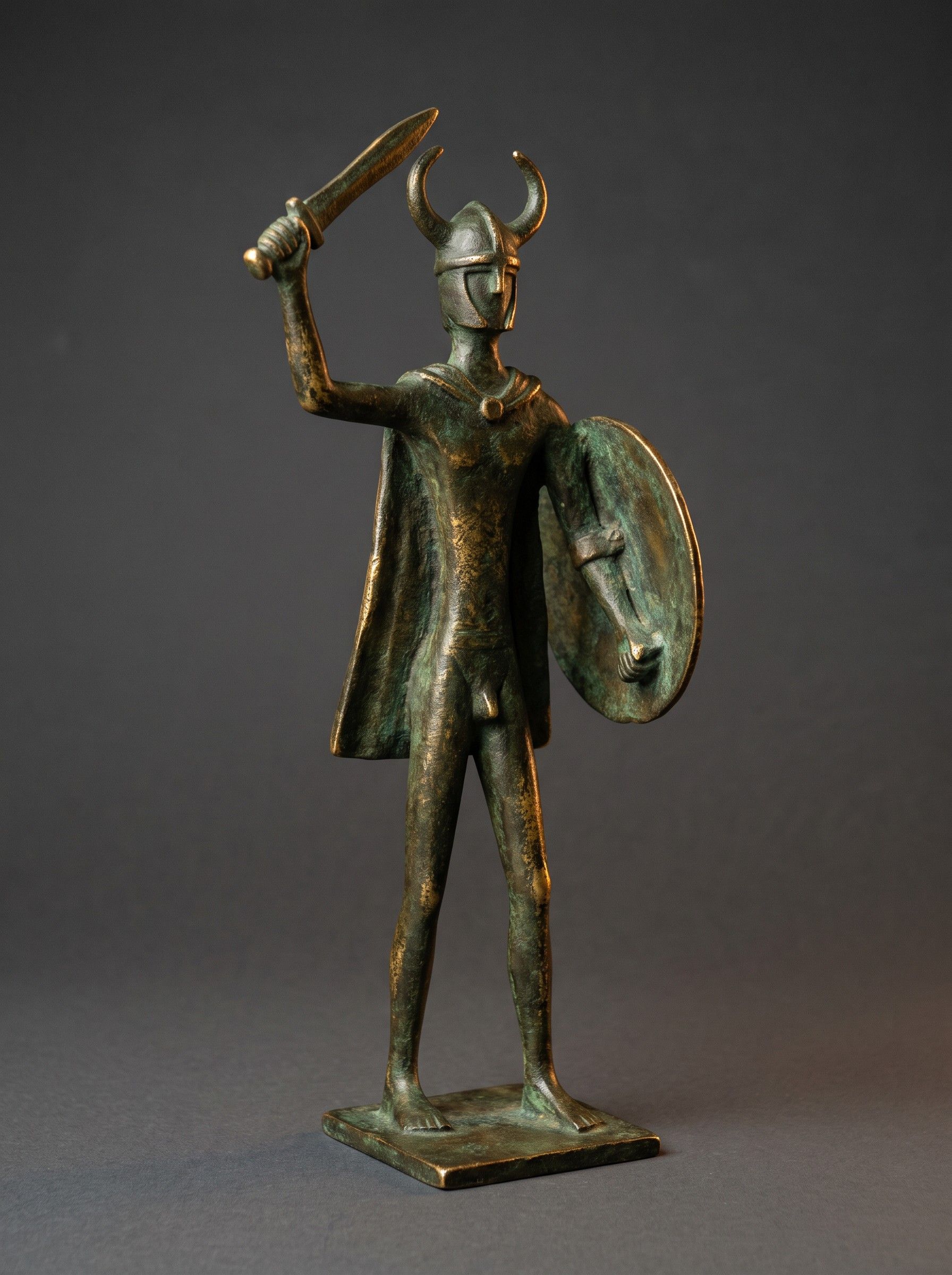
The Nuragic people cast bronze into small statues of warriors, chiefs and offerants: the bronzetti. In Shardana, bronze is the material of the best weapons, of gifts and of secrets. This is an original figurine created for the game’s world: hold the mouse button and drag to turn it around.
Wishlist
Add Shardana to your wishlist
For an independent game, wishlists are essential: they help Shardana get noticed on Steam. You will be notified when the game comes out.
Concept art